
The Szőnyi Museum was once the home and studio of István Szőnyi, one of the most prominent figures in 20th-century Hungarian painting.
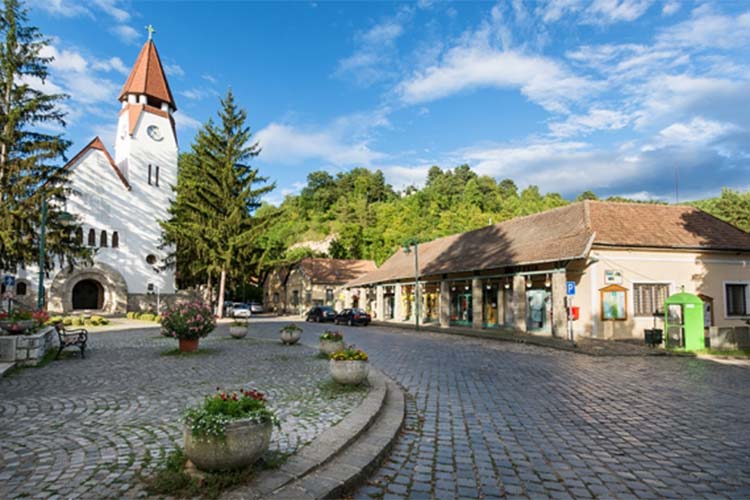
The Church of Our Lady of the Snows was built to designs by Károly Kós and Béla Jánszky, following the architectural traditions of Transylvanian wooden churches.
Along Napraforgó Street, you can admire traditional Slovak peasant houses. Further on, you can explore the Seven-Hole Railway Viaduct, the Museum of Shipping History, the Rock Chapel, the Calvary Chapel, the Trianon Memorial, and the Károly Kós Lookout Tower, which offers breathtaking views of the Danube Bend.
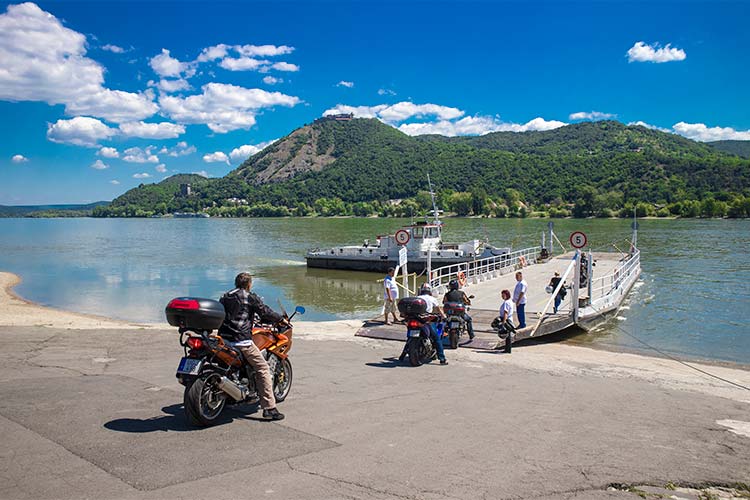
Situated on the banks of the Danube, Nagymaros is a charming small town with a peaceful atmosphere. Its main attraction is the beautiful view of Visegrád Citadel and Solomon’s Tower, but there is plenty more to discover.
Take a stroll along the elegant riverside promenade, where you’ll find a lovely playground and two excellent cafés serving delicious ice cream. Don’t miss the Julianus Lookout Tower, either!
In the main square, you can visit the former home of Kálmán Kittenberger, the famous African explorer and hunter. The square is also home to a statue of Saint Martin, the patron saint of Nagymaros.
Continue your walk to the Church of the Holy Cross, whose tower is the only surviving medieval ecclesiastical monument in the Danube Bend. The Calvary Chapel on Calvary Hill is also well worth a visit.
Every Saturday morning, the town hosts a farmers’ and artisans’ market, where local producers from the Danube Bend and the Börzsöny Mountains offer their goods. Browse fresh dairy products, smoked meats, jams, honey, eggs, and freshly baked pastries. If you have time left, hop on the ferry and explore the attractions of Visegrád.
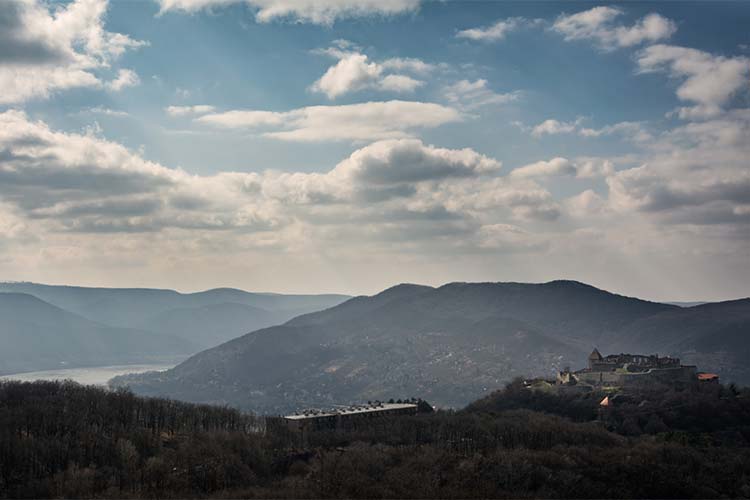
The Zsitvay Lookout Tower and the Nagyvillám Lookout Tower, also known as the Jubilee Lookout Tower, offer magnificent panoramic views of the stunning Danube Bend.
The Visegrád Citadel is an impressive sight and remains an iconic landmark of the region. The Visegrád International Palace Games are among Europe’s largest medieval festivals.
The Royal Palace is another highlight of this historic town. Its famous Hercules Fountain, elegant courtyard, beautifully maintained gardens, and chapel capture the spirit of the Renaissance.
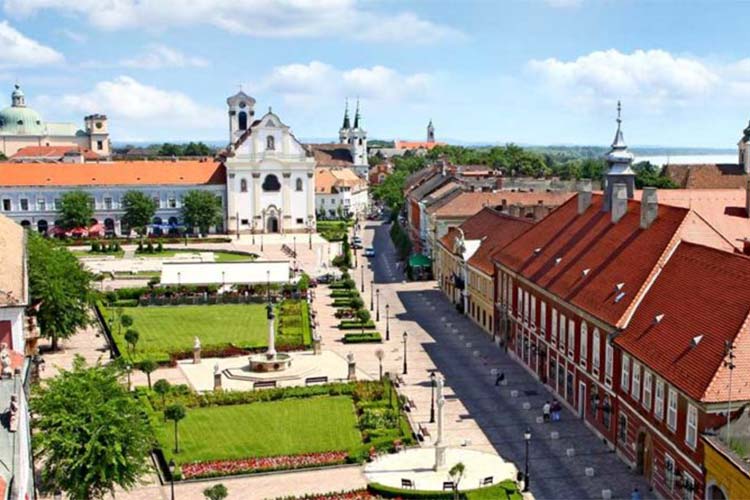
Vác is home to a truly unique attraction: Hungary’s only triumphal arch, built in 1764 by Kristóf Migazzi in honour of Empress Maria Theresa’s visit.
On the northern side of the town’s main square stands the Bishop’s Palace, while the southern side is dominated by the Town Hall. The square is also home to Saint Michael’s Church, with market stalls built alongside its surrounding walls.
One of the square’s architectural gems is the Church of the Whites, a former Dominican church built in Baroque and Rococo styles. During restoration work, one of the region’s most remarkable discoveries was made: a crypt containing the naturally mummified remains of former Vác residents. You can learn more about this fascinating find at the Memento Mori exhibition.
Another highlight of the main square is the Sajdik Exhibition, which introduces visitors to the whimsical world of Hungarian cartoonist Artúr Gombóc. If you’re in the mood for something sweet, stop by the well-known Mihály Patisserie (Dessert Salon) or Csokizó chocolate shop.
Walking from the main square towards the Danube, you’ll find the Greek Church, which hosts contemporary interdisciplinary exhibitions featuring visual arts, history, and archaeological collections.
And one more delightful detail: since the summer of 2021, Vác has been home to three miniature sculptures by the artist Kolodko. Discover the fascinating stories behind these tiny works of art as you explore the town.